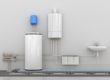
What should I replace my old gas boiler with?
Should I replace my gas boiler with an air source heat pump! Is this the right choice for me?

These are some things to consider!
-
Know what are the alternatives to gas boilers?
If your boiler is coming to the end of its life, it is time for you to consider what to replace it with.
As there are plans that traditional gas boilers are not to be installed from 2025, it is a good idea to do some research.
When it comes to finding an alternative to the gas boiler, there are plenty of options. There are boilers that run on alternative fuels. Such as oil, LPG and electricity to biomass and low carbon heating systems, including heat pumps.
In fact, there are so many options it is difficult to know what the best option is to choose.
The first place to start is to identify what heating source is suitable for your property.
If you are keen on a heat pump, you need to think about whether your property will work with one. This will depend on the type of build. How well insulated your home is, what type of windows you have, and what heating system including pipework is already in place.
If you are undertaking a build project, renovating, or making changes to your property to address the points above, then a heat pump might be suitable for you!
-
Understand more about Heat Pumps and the different types
What is a Heat Pump
A heat pump is a devise that takes heat from an outside source and moves it into your home. It does use electricity to do this, although the quantity of heat delivered into your home is much greater than the quantity of electricity used to power the system.
They are a great way to heat your property with electricity, reduce your dependency on gas and improve your carbon footprint.
Types of Heat Pumps
Air Source Heat Pumps
The heat pump unit is normally fitted to the side of the building, drawing in the air from outside. It transfers the heat by means of compression and coils made of conductive copper tubing. When heating is required, liquid refrigerant in the outside coil extracts the heat from the air and evaporates, passing into the inside coil where the gas returns to a liquid to produce warmth. This can then be fed into your household heating system.
Ground Source Heat Pumps
The energy stored in the ground can be utilised to run ground source heat pumps. This involves heat pipes being laid into the earth and have higher efficiencies than air sourced heat pumps as the temperatures you find in the ground are generally more constant.
The trade off with greater efficiency in ground source heat pumps is that they are usually more expensive to install as there needs to be significant excavation work to lay the piping.
Other types include Water, Hybrid, Ductless Split Units and Absorption Heat Pumps, any of which can be considered.
-
Will a Heat Pump be right for my property?
It is true that not all properties are suitable to have a heat pump.
The fabric of the building is important. Is your property well insulated? Do you have double or triple glazing? Do you have larger radiators, or under floor heating as this works best with heat pumps. If not, it can be a costly conversion.
Do you have space, have you thought about where one can be fitted?
A Heating and Energy Consultant can survey your property to assess if your home would be suitable.
Our team can also recommend any changed to the build or fabric of the property to ensure a heat pump would work efficiently.
It is important before you start to evaluate the compatibility of your existing heating system with a heat pump. Heat pumps require a different distribution system than gas boilers, which might involve modifying or replacing the existing heating infrastructure.
-
Will all my heating and hot water needs be taken care of with a heat pump?
Heat Pump Efficiency
Air source heat pumps are quoted as being four times more efficient than gas and electric boilers because they don’t have to burn fuel or convert electricity into heat.
However you do need to be aware of your consumption.
-
Will a heat pump save me money?
Our advisor Rob says that if you are planning work, or need to make changes then it is worth considering installing a heat pump.
Given the unstable energy prices at present, it is unlikely to have a big impact on cost savings.
-
What size heat pump will I need?
The size of your property, how many people live there and how much heat you use, will all factor into the size of the heat pump you will require.
It is very important to properly size the heat pump to ensure it can meet your heating needs. A professional can perform a heat load calculation to determine the appropriate size of the heat pump required for your property.
-
Consider indoor and outdoor space requirements!
Heat pumps typically require both indoor and outdoor units. You will need to have sufficient space indoors to accommodate the indoor unit (air handler or hydrobox) and outdoors for the outdoor unit (compressor). Ensure you have suitable locations available for the units.
In some situations, you may need to contact your planning office to ensure your choice of location is acceptable.
-
Electrical and pipework requirements:
Heat pumps require an adequate electrical supply. Depending on the size and type of heat pump, you might need to upgrade your electrical system to support the increased power demand. Also you need to remember the existing pipework you have might need modifications to accommodate the heat pump.
-
Control and zoning considerations:
Heat pumps often have different control requirements compared to gas boilers. You may need to install new thermostats and zoning systems to optimise the heat pump’s performance and energy efficiency.
-
Cost considerations:
Replacing a gas boiler with a heat pump can involve significant upfront costs. It’s essential to consider the cost of the heat pump unit. Including installation, potential system modifications, and any necessary upgrades to electrical or distribution systems. However, over the long term, a heat pump can provide energy savings that may offset the initial investment.

-
Advice
Given the complexity involved, it is recommended to consult with a qualified professional or energy specialist. They can assess your specific situation and guide you through the process of replacing a gas boiler with a heat pump.
If you are planning to make your home more energy efficient or overhaul your heating system and are interested in some independent expert advice on heat pumps then do get in touch. Call 01923 896550, email info@cl-m.com or complete a contact form.