Are you renovating your home?
Here is our House Renovation Checklist 

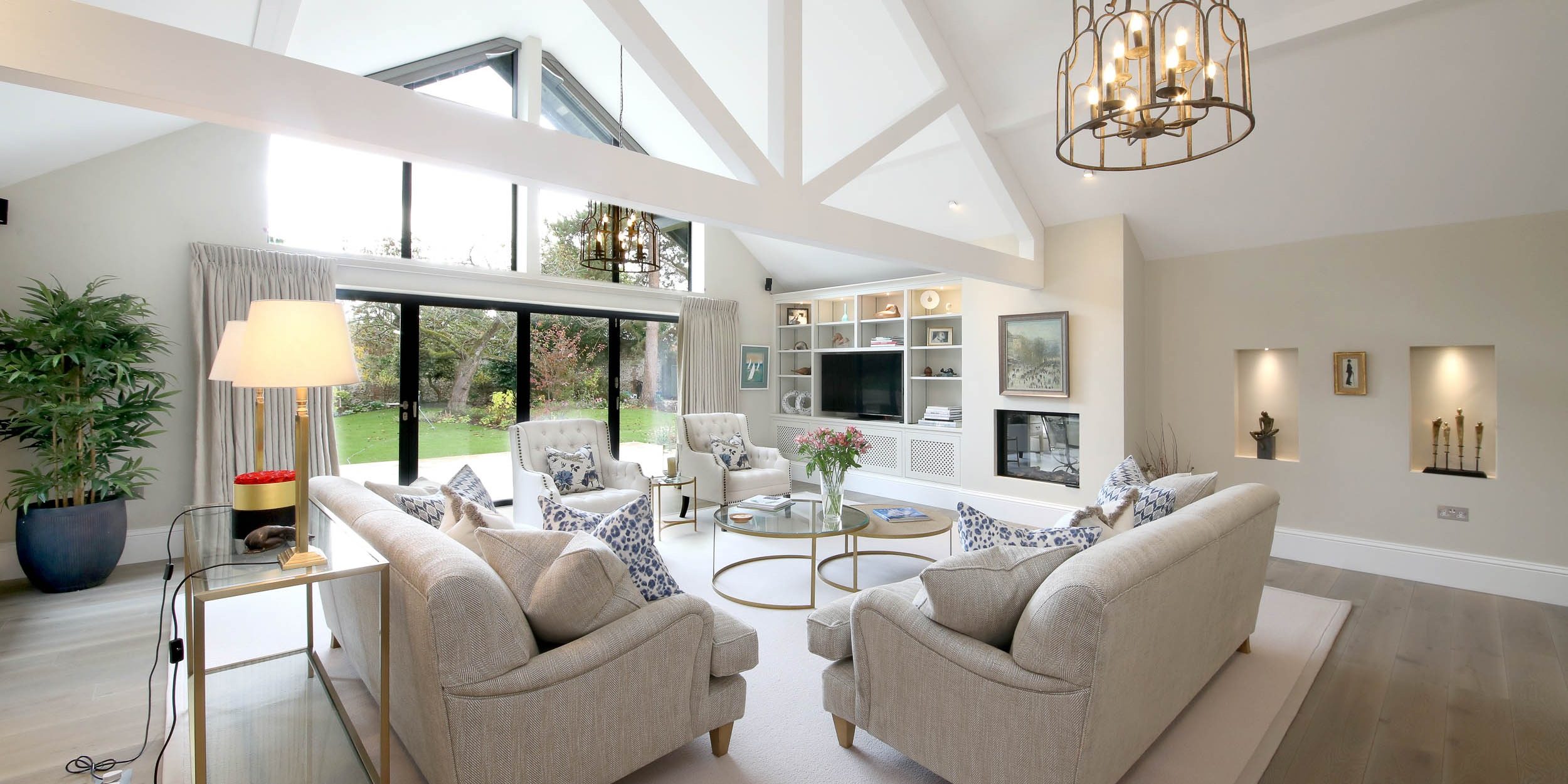
Looking to gain advice on renovating your home. We worked with Amory Brown on the complete renovation of an extremely dated house in Twickenham. The internal layout of the house was being reconfigured, a basement built and complete redecoration throughout.
The client was keen to keep some of the original features in the property. We are helping them to incorporate into the design of the furniture and fabrics.
These are some of the points to note before you start renovating your home.
1. Write your brief
Before starting out on your renovation project, it is very important to define what you want to achieve from the work. Without a clear focus it is difficult to even begin to make the major decisions required throughout the project. It may be that you are renovating a property for investment, extending it to add on extra space, changing the layout to create additional rooms or a more open plan feel. Whatever your aims, you will find writing down a list of them will help to give clarity to the project in your own mind as well as allowing you to filter it through to the contractors effectively.

2. Set your budget
Once you have set your brief, it is crucial to come up with an appropriate and viable budget for the project. It may be that after you have appointed your team, you have to rethink either your budget or your scope of works. We believe it is important to have a figure in mind when approaching the professionals you might appoint, as this will have a bearing on which contractors you choose. This will also allow them to give you a realistic idea of what you can achieve with the budget set out.
3. Appoint your team
Being comfortable with the team you appoint is paramount. You need to feel confident that they understand your brief. Also that they can work within your budget and will communicate well and in a timely manner. Not only with you but also between each other. A successful renovation project includes consideration on how the property will be used and lived in. As well as the aesthetics.
The number of professionals you appoint on your renovation will depend on a variety of factors.
- The scale of the project
- The time you have available to dedicate to the project yourself
- Your confidence to make decisions on spatial planning
- Architectural detailing
- Interior design to name just a few.
The contractors that you might consider to appoint are:
- project managers,
- architects,
- builders,
- interior designers,
- lighting designers and
- audio visual
- landscape garden designers – to name a few.
It can be very helpful to speak to friends and colleagues who have gone down the renovation route before. Take on their advice about who they used and whether they have any recommendations. Pop along to see their work, make sure you like what you see.
4. Spatial planning / Cohesive scheme from outset 

You should work with your team to plan the lighting and electrical layouts. Bathroom and kitchen designs need consideration too. Consider where the furniture will be positioned in the rooms, door swings, electrical appliances, the quantity of items you need to store and how you will use each room. Be clever with the design of small spaces. For example the area under the stairs could be used as a small office, cloakroom and additional storage.
5. Planning permission / Party wall permission
Once the initial design of your project has been thought out, it may be necessary to apply for planning permission. You may also need to request party wall permission from your neighbours. It is important to consider this early on as both processes can take some time to follow through. There may be conflict and you could need the time to reach an agreement. It is also crucial to factor the costs involved into your budget.
Planning permission will need to be applied for if you are changing the outside of your property or if you live in a listed building. The Planning Portal website is a very helpful tool for further information on this subject. From submission of your application to your local council, it is usual for an application to take at least three months for a decision to be made on an application.
If you are planning on carrying out any of the following; work on an existing party wall or party structure including a chimney breast or stack shared with another property, building on the boundary line between your property and a neighbouring property, excavating near a neighbouring building, carrying out repairs to the party structure, you are required to notify the neighbours for party wall permission.
6. Look / style
A great way of refining your ideas for the look and style you would like to go for is to spend time looking through magazines and newspapers and tearing out any images that you like. These can be of anything ranging from mood suggestions, colours, furniture, fabrics, finishes and architectural details. By putting all your cut-outs into a file or a book you can condense your ideas and get a feeling for the look and style you want to achieve. Starting with as many ideas as possible you can gradually fine-tune the look until it becomes something cohesive and true to what you would like to replicate. It is also a great tool for communicating your visual ideas to your designers and builders.

7. What can be re-used and what needs to be bought
It is worth spending time sorting through your current furniture. Just because it is old it doesn’t mean it is out of date. Remember furniture can be modernised and upcycled. You can strip it back and give it an update with paint or varnish. New handles or reupholstering it in a contemporary way can also make a difference. Even though you are modernising your home it doesn’t mean you need a completely new collection of furniture. Mixing old and new furniture together creates an interior with history and gives a lived in and relaxed feel to a space. Renovation and reusing items is a great way to regenerate them.
8. Keeping an open mind
Don’t be surprised if your project changes direction and costs appear that were unexpected. Building work very often throws up problems that need to be worked through. Even though surveys are carried out before work starts, it is impossible to know exactly how a building has been constructed before building work has begun. Your builders and project managers have the experience to manage these problems when they appear.
You may also find that your ideas for the design change as the project evolves. Your contractors involved in the refurbishment will also have a different slant on things. They may have new ideas to share which may influence your aesthetic direction. You’ll come across new products and styles. It is great to incorporate these into your project to further invigorate it and make it your own.
All of these change are great, but they will have an effect on your budget and timescales. Make sure they are fully documented.
The last thing to add, is that you want to enjoy the process. If this is your forever home, you only get one shot.
For more detail why not give us a call on 01923 896550 or email us at info@cl-pm.com