Green your home by following those green interior design tips and advice.
Here’s part three in the series of elements to consider when you come to redecorate your new home. Today, our blogs and case studies, looks at kitchens. Go Green in Your Home #3 Kitchens
Kitchens
Appliances
Specifying A-rated appliances for your kitchen or utility room is a good way to embark on efficiency measures. But there’s more to it than that. Many washing appliances are cold-water feed only and therefore include a heating element, for example. That means that you can make energy savings by turning the wash temperature down. You may prefer to opt for hot-water feed appliances, as these give you the option of using them in tandem with renewable heat sources. You should also check your electricity tariff and run appliances at off-peak times – especially important if you happen to use a tumble drier (these demand high energy usage).
If possible, use a gas-powered cooker and hob for the highest possible efficiency levels – or consider an electric induction hob. Fan ovens speed up the cooking process thereby saving energy (the effect is even greater with steam ovens).
Lighting
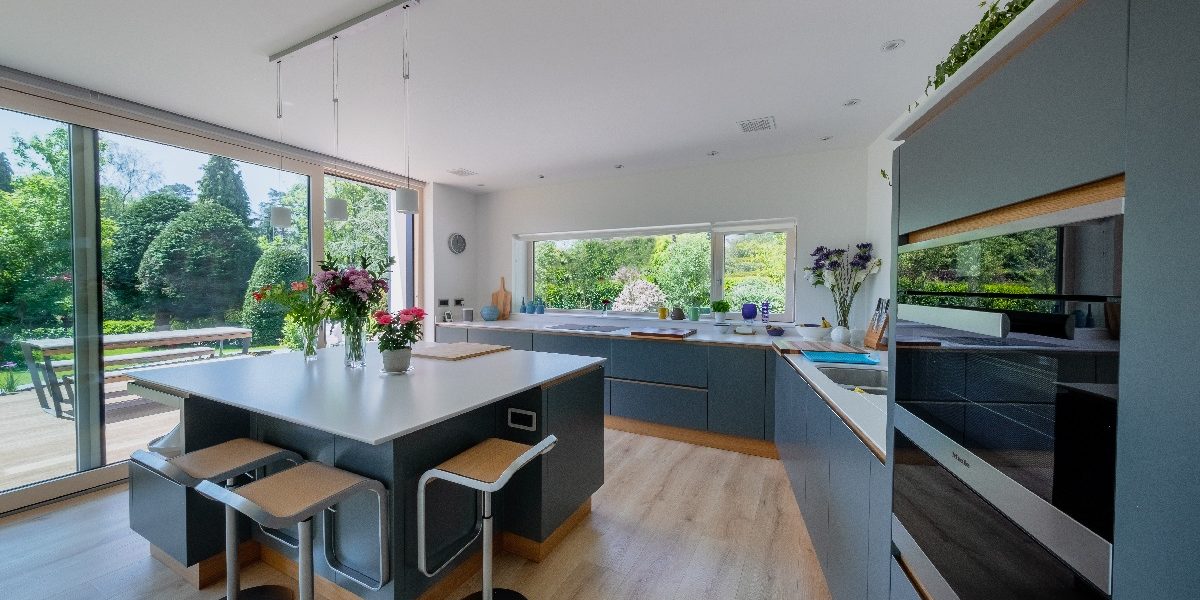
Good lighting is vital in the kitchen, and it’s possible to achieve this in an eco-friendly way. Task lighting is a key consideration – use Light Emitting Diodes (LEDs) for the best efficiency levels, or compact fluorescents (CFLs) for a stronger light. You may wish to route your task lighting system through a motion detection switch, on a time delay, so that it’s never left on or unnecessarily. And don’t forget natural light – especially if you know you’ll be using your kitchen a lot during the day, or if it’s likely to double up as a breakfast, dining or work area. You can make the most of daylight by fitting windows, skylights and sunpipes in appropriate positions – talk to your designer about the best ways to incorporate these.
Furniture
If you’re building the fabric of your home to be green, why not take the same approach to your furniture and furnishings? Many companies now stock excellent ranges of environmentally-friendly options, such as recycled glass or sustainable bamboo worktops, including some of the well-known fitted kitchen manufacturers.
Most modern kitchens feature units that conform to standard sizes, so if you’re replacing an existing kitchen you may be able to re-use many of the existing carcasses – even if you’re planning a radical redesign. Simply blend them in with any new cupboards by ordering replacement doors, and you can add recycling to your list of green credentials. Alternatively, check out ex-showroom stock, which often sells at greatly reduced prices and may otherwise end up in landfill.
If you enjoyed the above blog post, you might also like other articles from the same series.