
Earth Day 2024 – Planet vs Plastics – Reduce Plastic in Construction
Plastic is now in the air we breathe, the water we drink, the clothes we wear and the food we eat. It is literally everywhere.
Plastics are synthetic materials that have been engineered to possess a range of specific properties. Due to these properties, plastics are widely used in many different industries including the construction industry. The modern world is built from plastics thanks to their unrivalled diversity, versatility, and costs.
Out of approximately 51m tonnes of plastic used across Europe, the construction industry is responsible for about 10m tonnes, or just under 20%.
Plastic is formed in a number of ways, but there are 3 that are key players in the built environment. Let’s explore them.
Types of Plastic:
Plastics are used in a vast range of building components, such as seals, windows and doors, roofing, internal and external finishes, paints, panels, varnishes, stains, pipes, guttering and cables, floor coverings, membranes, formwork, supporting structures, building skins and insulation. Along with the uses in packaging and single use items.
Statistics for the UK show that around a third of these construction plastics are recycled, while a third go to landfill, and a third are incinerated.
We look at the types of plastics used in construction, try to understand their benefits, and look at ways construction can reduce the plastic waste it incurs.
POLYETHYLENE PLASTIC (PE)
Polyethylene is a type of plastic that can be made in a variety of ways for a number of uses.
Low-Density Polyethylene (LDPE) is a very flexible material with unique flow properties that makes it particularly suitable for shopping bags and other plastic film products.
Linear Low-Density Polyethylene (LLDPE) is very similar to LDPE, but offers added advantages. The production process for LLDPE can be less energy-intensive than LDPE.
High-Density Polyethylene (HDPE) is a robust, moderately stiff plastic. It is frequently used in plastic for cartons, household items, fibres etc. This will typically be found in cables, piping and insulating materials for building,
Ultrahigh Molecular Weight Polyethylene (UHMW) is an extremely dense version of polyethylene. It can be spun into threads with tensile strengths many times greater than steel.
Polyethylene is an incredibly useful commodity plastic but sadly it is not one that recycles easily.
In the construction industry there are few options for replacement items within the same budget.

POLYPROPYLENE PLASTIC (PP)
PP is a thermoplastic polymer that is quite durable. It can withstand daily wear and tear and is resistant to cracking and stress. Polypropylene can be used in a variety of ways within building and construction, including: watertight membranes, carpet textiles, films and sheets used in insulating building wraps, industrial adhesives and tapes, and plastic parts included in piping to name a few.
Some of the benefits of the use of polypropylene in these applications include:
- Energy Efficiency: Building wraps and air and moisture barrier membranes enhanced with polypropylene can decrease air intrusion and heat transfer, increasing a building’s energy efficiency.
- Weather Resistance: Durable siding and air and moisture barrier films and sheets made with polypropylene can help buildings and other structures resist damage from extreme weather like hail and winds.
- Green Roofing Options: Waterproof membranes made with polypropylene are used to create the drainage mats used in vegetative roofing systems.
It is therefore necessary to assess where the benefits of using these materials outweigh the risks. While we strive to create energy efficient properties, it is obvious the uses of PP will continue to grow.

POLYVINYL CHLORIDE PLASTIC (PVC)
Polyvinyl chloride (PVC) is a thermoplastic that is odourless, solid, brittle, and usually white in colour. Currently it is ranked as the third most widely used plastic in the world (behind polyethylene and polypropylene).
PVC is the most widely used plastic material for building and construction products such as pipes, cables, window profiles, flooring, and roofing. PVC makes a major contribution to the quality, safety, and cost-effectiveness of construction materials.
It is also one of the most controversially debated materials regarding its hazardous impacts on the environment and human health, but this is mainly when mixed or contaminated with other substances.
The more we learn, it is becoming a worrying feature that the benefits of excess plastics come at a growing cost to the environment and public health.

The Effect of Plastics on Health:
Plastics are key materials in modern buildings, enabling low-cost housing, healthcare, disaster resilience and high-performance Passivhaus architecture.
Microscopic, potentially toxic particles and fibres, measuring the width of a human hair or less, have been found throughout the human food chain, Microplastics are in salt, beer, fresh fruit and vegetables, and drinking water. Airborne particles can circle the globe in a matter of days and fall from the sky like rain.
Information about how plastics may be affecting human health is still limited but scientists are now calling for a complete rethink about how plastics are made and disposed of.
Determining if microplastics cause harm is extremely hard. Plastics are made from a complex combination of chemicals, including additives that give them strength and flexibility. Both plastics and chemical additives can be toxic.
There are ongoing studies which will in time provide answers, but in the meantime, the National Geographic provides a status of where we are at, and arguably ‘if’ there is a risk at all.
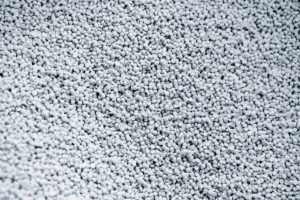
Plastic Uses in Construction and Benefits:
Plastics offer several advantages that make them ideal materials for use in the construction industry. Including being able to mass-produce prefabricated components, having a short lead time, being relatively cost-effective, and being highly versatile.
Plastics in Piping and Ductwork
One of the most common uses of plastics in the construction industry is piping and ductwork. Plastics are often used in piping applications because they are lightweight and easy to install.
Specific plastics are good at preventing heat transfer. This is important in ductwork applications where hot or cold air is being transported.
Insulation
Plastics offer several benefits as an insulating material. They are lightweight, easy to install, and have a high R-value or thermal resistance. Thus, helping to keep homes and buildings warm in the winter and cool in the summer.
Plastic insulation is often used in walls, ceilings, and floors. It is also used to insulate piping and ductwork. In addition, plastic insulation can be used in electrical applications, such as wire and cable insulation.
Plastics are also highly resistant to moisture and mould, making them an ideal choice for use in damp or humid environments.
It is also fire-resistant, which is an important consideration in many construction applications.
Floor Coverings
Plastic is also commonly used as a material for floor coverings. Floor coverings made from plastic are often used in commercial and industrial applications because they are durable and easy to clean. Plastic floor coverings are also slip-resistant, making them ideal for use in wet or oily environments.
Floor covering is a part of the construction process that involves covering the floor with a material such as a carpet, tile, or vinyl. Vinyl is a type of plastic that is commonly used in floor coverings. Vinyl is durable and easy to clean, making it an ideal choice for use in high-traffic areas. In addition, vinyl is resistant to moisture and has a long lifespan.
Windows and Doors
Windows and doors made from plastic are often used in commercial and industrial applications because they are durable and easy to maintain. In addition, plastic windows and doors offer good insulation properties, making them ideal for use in cold climates.
It is also common to find plastic windows and doors that are impact-resistant, making them a good choice for use in areas where there is a risk of breakage.
Source https://www.worldconstructiontoday.com/news/the-use-of-plastic-materials-in-the-construction-industry/

How can we reduce Plastics in Construction:
As we have seen what benefits plastic can bring to the built environment. We need to look at ways that are realistic in reducing consumption.
The key ways are in reusing materials, recycling, and waste management.
Construction Waste:
Six different plastic types account for around 90% of all plastic waste generated, with PVC being the most common material, comprising about half of all waste plastics, followed by polyethylene and polypropylene. Not all of this will come from construction, but a large proportion will be single use items which are heavily used within the industry.
Plastic can be vital as a building material. However, when the material is single-use plastic it becomes a bigger problem. It is wasteful and can be easily avoided.
These are the most common sources of plastic waste in construction:
- Plastic packaging (accounting for 25% of packaging waste in construction).
- Unused materials from over ordering and off-cuts.
- Improper storage and handling of materials.
- Over-specified project design.
- Workforce food packaging and utensils.
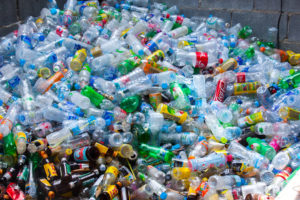
Reduce Wastage:
Here are some tips to reduce plastic packaging waste in construction:
- Choose non plastic materials in your designs.
- Talk with your supplier to see if they can reduce the packaging, or if they’re able to take back the packaging to recycle.
- Consider ordering in bulk or larger packs, as this will cut the volume of packaging per item.
- Use reusable plastic boxes to place and protect materials in. These boxes can then be returned to the supplier.
- Reuse large sheets of plastic sheeting that arrived as wrapping for other uses on site. Such as dust sheeting, cladding as weather protection, or material protection.
- For any plastic packaging that can’t be recycled, why not plan to send it to a licensed Waste Management Contractor. These experts are best placed to decide their destination.
- Encourage the work force on site to use re-usable bottles.
- Provide a drinking water option with recyclable or reusable cups to reduce single use items.
- Provide a recycling option on site for contractors to use rather than throw used items away.
- Ensure waste management and recycling are clear statements in your policy and display signage on site.
Constant reminders will help to change culture.
Reuse and Recycle:
World Environment Day – Reduce Plastic in Construction
Salvaged materials typically have much lower carbon value than newly manufactured materials because the carbon used to make them has already been spent. The more the industry can use, the better the prospects for the planet.
Space, time, and equipment is a factor determining the reuse of materials on certain projects. However, it would still be worth asking your design team to understand if there are opportunities at an early design stage.
Points to consider:
- What opportunities are there to reuse materials on site and import recovered materials?
- Will space be available for materials storage and processing, and what will happen to any waste materials which cannot be reused?
- Will the materials be available in sufficient quantities?
- Can we donate any of our waste?
- Would the benefits outweigh the costs?
Recycling is far more inefficient compared to using less materials in the first place, so plan, plan and plan.
Recycling
Many valuable materials end up in a landfill. Most can still be reused in some way. Below you’ll find the most common building materials and their uses after the recycling process:
- Steel, Aluminium, Iron and Copper – are all reusable for a number of uses and are recyclable.
- Glass – used for different purposes including the manufacture of concrete and insulation.
- Wood – mainly recycled for the creation of energy.
- Bricks, concrete and stones – the materials are crushed and used to produce new asphalt and concrete.
- Concrete – can be crushed and recycled.
- Metal – recycling metal is much more energy efficient than creating new metal from raw materials.
Recycling waste building materials can minimise the cost of construction projects, but more importantly, decreases the amount of waste sent to landfills.
When you start to look into all these points, we realise how much impact we can have.
Earth Day 2024 – Planet vs Plastics
Earth Day 2024 – Planet vs Plastics is a reminder that people’s actions on plastic pollution matters. The steps governments and businesses are taking to tackle plastic pollution are the consequence of this action.
Every little does really help, and we all need to know what we can do. It is time to look to industries to help accelerate this action.
Want to chat more?
If you’d like to understand more about how our ethos on sustainable building and how our experts can help, then we’d love to hear from you.
For further information please call our friendly team on 01923 896550, email info@cl-pm.com or complete a contact form today.